

DEMNAS | Junghuhn Climate Zone
PRODUCTSPATIAL MODELLINGNEW ARRIVAL
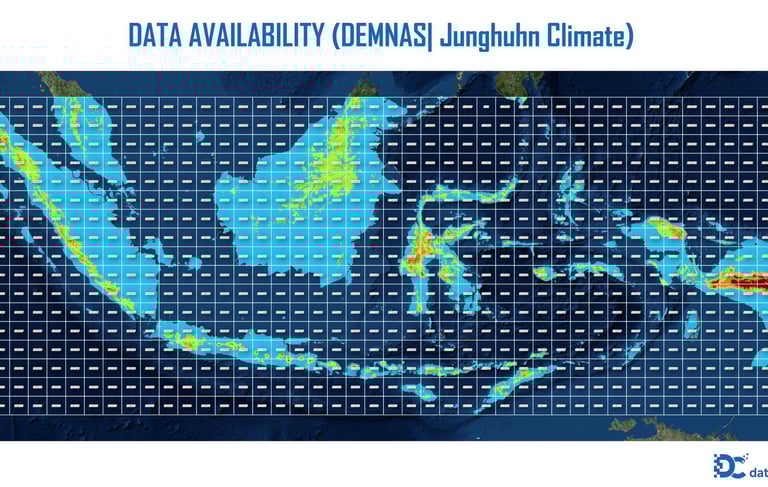
DEMNAS | Junghuhn Climate Zone
Level of Effort : Low
Junghuhn Climate Zones is an elevation-based climate classification developed by Franz Wilhelm Junghuhn, a German scientist who conducted ecological explorations in the Dutch East Indies (now Indonesia) in the 19th century. Junghuhn divided the tropics into four main zones:
Hot (0-650 m),
Temperate (650-1500 m),
Cool (1500-2500 m),
Cold (>2500 m).
Each zone has distinctive temperature, humidity, and vegetation characteristics, making it highly relevant in ecological studies, agriculture, and regional planning, especially in mountainous regions like Indonesia.
This system is not only a scientific legacy, but also a tool that is still very relevant to address today's challenges, such as climate change and land degradation. By delving deeper into Junghuhn's climate classification, there are great opportunities to develop innovative research in agroclimatology, conservation zoning and ecoregions.
Data Source :
Name: DEMNAS
Publisher: BIG (Badan Informasi Geospasial)
Version: 2018 (latest version may vary)
Spatial Resolution : 0.27 arc-second (~8.25 meters at the equator)
File Format GeoTIFF
© 2025. All rights reserved.




LOCATION
East Kalimantan,Indonesia